
Clarify why this audience matters
Frame the show, network or portfolio around a specific advertiser opportunity instead of generic scale claims.
A sponsorship deck fails in the follow-up question, not the presentation. We build the deck out of verified audience, campaign and delivery evidence, so when a buyer asks where a figure came from, the answer is a source rather than a shrug.
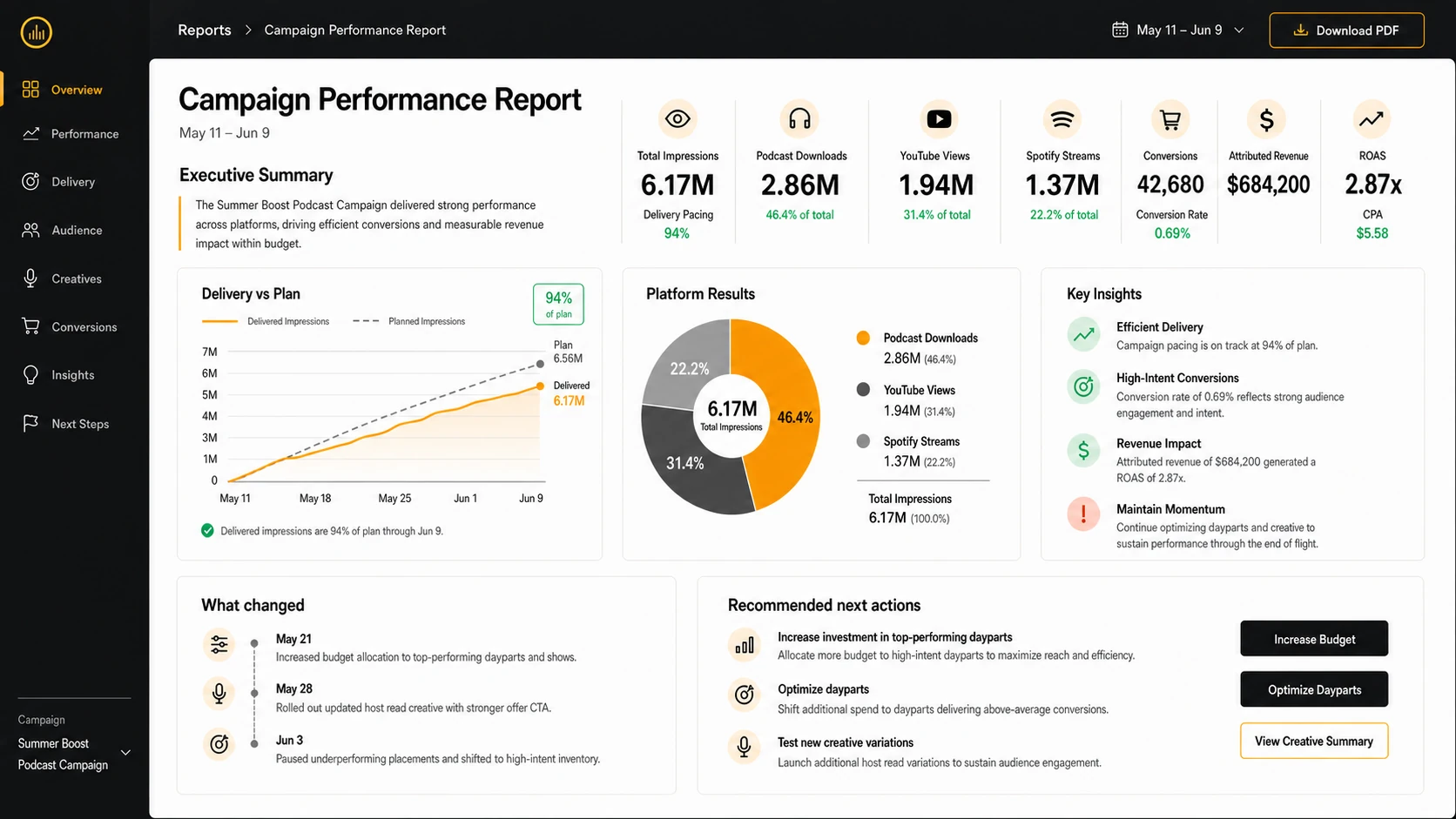
Illustrative example using fictional data. Final decks are customized to the agency, show, audience and sales objective. No client information is shown.
Good design matters, but the real job is to connect the audience, the inventory and the proof into a credible commercial story.
Frame the show, network or portfolio around a specific advertiser opportunity instead of generic scale claims.
Pull verified reach, consumption, campaign and audience context into a focused proof sequence.
Structure inventory, partnership options and calls to action so the buyer knows what is available and why it fits.
A general media kit, a show-specific sponsorship deck and a custom advertiser pitch should not tell the same story. We structure the deck around the decision in front of the buyer, then select only the evidence that helps that decision.
Quarterly business review decks remain part of the managed reporting service because they explain an existing relationship. Pitch decks are scoped separately because they help create or expand the relationship rather than explain it, but both draw on the same reconciled reporting record.
The strongest pitch material comes from reporting the agency already trusts. Campaign outcomes, audience growth and delivery evidence can move from the reporting operation into the sales story without becoming a loose collection of screenshots and claims.
A media kit is usually a reusable overview. A pitch deck is structured around a specific buyer, partnership or commercial objective. One can provide the foundation for the other.
Yes. The deck can follow an established identity and template or be rebuilt as a new white-label sales asset.
The deck should use verified audience, campaign and content sources available to the agency. When reporting operations are already in place, the strongest proof can flow directly from that record.
Yes. QBR decks are included within the managed reporting service because they turn recurring client performance into a quarterly narrative and action plan.
Turn verified audience and campaign evidence into a clear reason for the advertiser to move forward.
Book a 30-minute reviewWe reply within one business day.